
Modular skid vs custom installation: which option speeds up your production launch?
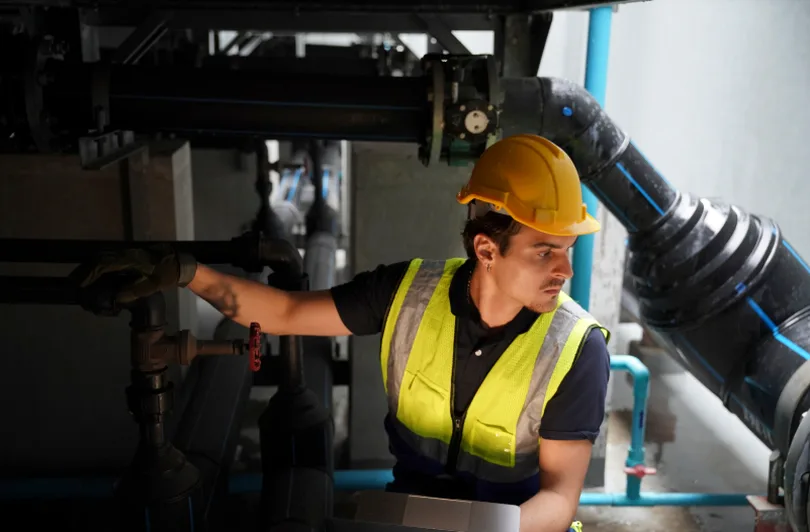
When a new process needs to be integrated into a plant, the choice of installation method can have a direct impact on the project schedule.
Two approaches are generally possible: assembling the equipment directly on the production site or grouping part of the system on a pre-assembled skid in the workshop, then transporting it and connecting it to the factory.
At first glance, skid-steer seems like the obvious solution to save time. Much of the work can be done in the workshop while the site prepares to receive the equipment.
But this is not always the most suitable option.
Some processes integrate very well into a modular configuration. Others require installation directly on site due to their size, the configuration of the plant, or very specific requirements.
The real question is therefore: Will a preassembled skid actually speed up your project, or does this solution risk limiting the flexibility that your process needs?
What is a process skid?
A skid is a set of equipment assembled on a common structure before being delivered to the production site.
According to the project, it can group together various elements of the process, such as piping, pumps, valves, and instrumentation.
Rather than installing and assembling each component directly in the factory, a significant part of the system is therefore manufactured and assembled in the workshop.
Once delivered, the skid is positioned in the intended location and connected to the other facilities of the plant.
Aran manufactures custom-made stainless steel skid units that can integrate process equipment, piping, and instrumentation into a compact system that is ready to be installed.
This approach changes mainly the place where part of the work is carried out Instead of building everything on the client’s site, a portion of the project is moved to a controlled workshop environment.
Why can a skid accelerate a project?
The main advantage of a skid is the ability to carry out several project stages in parallel.
In a fully on-site installation, some interventions sometimes have to wait until previous work is completed. The space must be available, the equipment must be in place, and the different teams must coordinate their interventions.
With a modular approach, the fabrication of the skid can progress in the workshop while other work is carried out on site.
While the system is being assembled, the customer can, for example, prepare the location where the equipment will be installed and advance other parts of their project.
Once the skid has been delivered, a large part of the assembly is already complete.
This can reduce the number of operations to be performed in the factory and shorten the period required for on-site installation.
For a company that wants to start producing quickly, these weeks of extra time can be valuable.
Every week before production starts has a cost
The cost of an industrial project is not limited to the price of the equipment and its installation.
It is also necessary to consider the time during which the new line or the new process is not yet in production.
If new equipment is needed to increase production capacity, launch a product, or meet new demand, every week of delay can push back the revenues associated with that project.
That is why the cost of a skid must be analyzed beyond its manufacturing price.
While prefabrication reduces the time spent on site and speeds up commissioning, the company can potentially start producing earlier.
In this context, the time frame itself becomes an element of the return on investment.
The good comparison is therefore not only:
How much does the skid cost?
It is also necessary to ask:
How much does it cost us each week during which this process is not operational?
The workshop environment also has its advantages
Preassembling a system in the workshop is not just about saving time.
This also allows for a significant portion of the manufacturing to be carried out in an environment designed for this type of work.
Welder, turners and other specialists can work with the necessary equipment and tools without having to deal with all the constraints of an active factory.
On a production site, space may be limited. Other equipment operates nearby. Some areas may be difficult to access, and interventions sometimes have to be organized around the production activities.
In the workshop, conditions are generally more predictable.
For a skid comprising many sections of piping, valves, and components, this ability to assemble the system in a controlled environment can simplify fabrication before it arrives on site.
Less work in the factory can also mean less disruption
An installation carried out directly on site may require the presence of several workers for an extended period of time.
In a factory that is already in production, this can become a significant issue.
Work must be coordinated with existing operations, access must be managed, and sometimes production stops must be planned to allow for certain interventions.
The skid moves part of this work off-site.
The on-site installation obviously does not disappear: the system must always be positioned, connected, and integrated into existing installations.
But since part of the assembly has already been completed, the time required on site can be reduced.
For a factory where every production stoppage is costly, this advantage can become as important as the overall speed of the project.
So, why not always choose a skid?
Because a skid must respect a fundamental constraint: it must be able to be manufactured, transported and installed within the available space.
Not all processes lend themselves to this approach.
The size of the system, the weight of the equipment, access to the factory and the configuration of the building can limit what can be preassembled.
A skid must be able to leave the workshop, be transported to the customer, enter the building and reach its final location.
In an existing installation where space is particularly limited, building directly on site may therefore be more logical.
The configuration of the process also plays a role. Some projects involve numerous connections to existing equipment or must adapt to a very specific geometry.
In these situations, a customized installation carried out on-site can offer greater flexibility.
When is a custom installation still preferable?
A direct installation on site can be the best choice when the process must adapt closely to the existing environment.
This is especially the case when the available space requires a complex configuration or when the new network must connect to several already installed equipment.
This approach allows certain elements to be adjusted directly in accordance with the realities observed on the ground.
It may also be preferable for large-scale installations that would be difficult to transport in the form of pre-assembled modules.
Choosing a site installation therefore does not mean choosing a less efficient solution.
In some projects, The flexibility offered by this approach is precisely what allows for the best results.
Is a skid less customizable?
The word «modular» can give the impression that a skid is a standard product that the customer must adapt their process to.
That is not necessarily the case.
A skid can be designed to suit the process, the equipment to be integrated, the available space, and the customer’s requirements.
Aran designs and manufactures, among other things, custom skid systems incorporating process equipment, piping and instrumentation.
The difference is therefore less a question of personalization than a question of method of manufacture and integration.
However, there is a practical limit: the more a system depends on numerous connections distributed throughout the factory or on a physical configuration that is difficult to replicate in the workshop, the less an entirely modular approach can be advantageous.
In some cases, a combination of both approaches may then be relevant.
Is it necessary to choose only one approach?
Not always.
A project can include some pre-assembled sections in the workshop and others that are made directly on site.
Components that lend themselves well to prefabrication can be grouped into modules, while complex connections or parts that are highly dependent on the configuration of the building can be installed on-site.
This hybrid approach allows you to take advantage of some of the benefits of the skid without trying to integrate the entire project into a modular solution that doesn’t suit it.
The goal remains the same: to reduce the time and number of on-site interventions without compromising the needs of the process.
Questions to ask before deciding
Before choosing between a preassembled skid and a custom installation carried out on site, a few questions can help guide your thinking quickly:
- What is our actual production schedule?
- How much does a delay of a few weeks cost us?
- Can the factory easily accommodate a pre-assembled module?
- What are the constraints on access and space?
- Does the process need to connect to multiple existing devices?
- Which part of the system could be manufactured in parallel with the work carried out on the site?
- How much downtime can we accept for the installation?
- Are our needs likely to change or be modified during the project?
These questions allow us to determine whether the main focus of the project is speed, flexibility, or a balance between the two.
Which solution actually speeds up production?
If the process can be grouped into a portable module and the main objective is to limit on-site work, a pre-assembled skid can be an excellent way to speed up the project.
Part of the manufacturing process can progress while the site is being prepared, potentially reducing the time required for installation once the equipment is delivered.
Conversely, when a process needs to be integrated into a complex, highly constrained or heavily dependent environment on existing facilities, a customized installation directly on site may be more relevant, even if it requires more on-site work.
The choice should therefore not be based on the idea that one method is systematically better than the other.
Aran manufactures custom-made skid-mounted systems and also installs piping and equipment directly at its customers’ sites. This capability allows the project to be tailored to the customer’s actual constraints rather than imposing a one-size-fits-all approach.
Ultimately, the best solution is the one that allows put the process into production as efficiently as possible, without sacrificing the quality, compliance or flexibility that the installation actually needs.
Discover more articles
Modular skid or custom installation? Timelines, downtime costs, access and space: questions to ask to speed up your…
Corrosion, cracks, repeated repairs: discover 5 signs that an stainless steel tank needs to be repaired or replaced.
Standard equipment or custom-made fabrication? Discover when custom-made becomes relevant for an industrial liquid process system.
6 Responses